


05-06-2026 00:52:09 10 Market News
Sustainability has evolved beyond a passing trend to become the foundational operating framework of the global economy. As green standards tighten worldwide, Vietnamese construction companies face a clear imperative: accelerate their transformation or risk being left behind.
The global economy is undergoing the most far-reaching structural shift of modern times, encompassing infrastructure, materials, energy, and production systems, all moving decisively toward sustainability. With the global construction market expected to reach USD 40 trillion by 2045, the push for green transformation is compelling companies to redesign their business models at unprecedented speed.
For Vietnam, this pressure is intensified by the government’s commitment to achieve net-zero emissions by 2050. This pledge has fundamentally raised expectations for the construction and building materials sectors. Green standards, low-carbon requirements, supply-chain transparency, and environmental, social, and governance (ESG) compliance are no longer optional; they are essential entry conditions for global markets.
Vietnamese construction enterprises now confront a stark reality: failure to complete their green transition within the next five years could result in exclusion from the international marketplace.
For Vietnam, this pressure is intensified by the government’s commitment to achieve net-zero emissions by 2050. This pledge has fundamentally raised expectations for the construction and building materials sectors. Green standards, low-carbon requirements, supply-chain transparency, and environmental, social, and governance (ESG) compliance are no longer optional; they are essential entry conditions for global markets.
Vietnamese construction enterprises now confront a stark reality: failure to complete their green transition within the next five years could result in exclusion from the international marketplace.

As global demand for green buildings, low-carbon materials, and sustainable infrastructure accelerates, the green finance market has expanded beyond USD 6.2 trillion. Capital is increasingly flowing toward construction and infrastructure projects, offering longer tenors and lower financing costs.
However, only a limited number of Vietnamese companies have successfully accessed these funds. The challenge is not a shortage of capital, but rather the inability to satisfy the core criteria required to unlock green financing.
Key shortcomings include:
However, only a limited number of Vietnamese companies have successfully accessed these funds. The challenge is not a shortage of capital, but rather the inability to satisfy the core criteria required to unlock green financing.
Key shortcomings include:
- The absence of ESG reporting aligned with international standards, with many existing disclosures remaining largely symbolic and lacking quantitative metrics or independent verification.
- A lack of lifecycle emissions assessments (LCA–EPD) for construction materials, preventing Vietnamese products from demonstrating low-carbon credentials in export markets.
- Insufficient transparency in carbon data, making it difficult to substantiate real emissions-reduction commitments.
- Limited availability of green credit products within domestic banking systems, restricting access to financing for green technologies.
- The absence of a dedicated guarantee mechanism for Vietnamese contractors, hindering their ability to meet financial requirements for international tenders.
In essence, global green capital is abundant, but Vietnamese enterprises have yet to obtain the “green passport” required to access it.
“Without ESG compliance, Vietnamese construction firms will be screened out at the pre-qualification stage, regardless of their technical expertise or cost competitiveness.”
“Without ESG compliance, Vietnamese construction firms will be screened out at the pre-qualification stage, regardless of their technical expertise or cost competitiveness.”
Green Standards: The World’s New Technical Barrier
In recent years, ESG criteria have become mandatory benchmarks in contractor pre-qualification, supplier assessments, and international credit evaluations. While global markets are rapidly institutionalising green requirements, Vietnam remains in the early stages of adoption.
As the standards gap widens, the competitive space for Vietnamese firms continues to shrink. Even technically capable contractors can be disqualified simply for failing to meet emissions-related benchmarks.
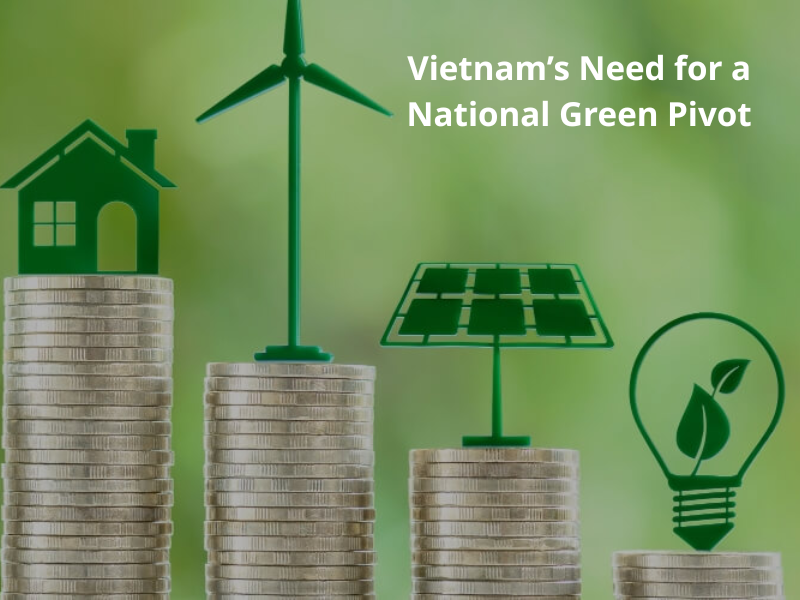
Vietnam’s Need for a National Green Pivot
To capture the next three decades of green investment and avoid structural marginalisation, Vietnam must pursue a comprehensive and coordinated transition.
1. Establish a national green standards framework
Clear, unified standards will provide businesses with a roadmap for compliance, investment, and transparency. Priorities include standardising green building certifications, mandating LCA–EPD for construction materials, and enforcing carbon transparency for public-sector projects.
In recent years, ESG criteria have become mandatory benchmarks in contractor pre-qualification, supplier assessments, and international credit evaluations. While global markets are rapidly institutionalising green requirements, Vietnam remains in the early stages of adoption.
As the standards gap widens, the competitive space for Vietnamese firms continues to shrink. Even technically capable contractors can be disqualified simply for failing to meet emissions-related benchmarks.
Vietnam’s Need for a National Green Pivot
To capture the next three decades of green investment and avoid structural marginalisation, Vietnam must pursue a comprehensive and coordinated transition.
1. Establish a national green standards framework
Clear, unified standards will provide businesses with a roadmap for compliance, investment, and transparency. Priorities include standardising green building certifications, mandating LCA–EPD for construction materials, and enforcing carbon transparency for public-sector projects.
2. Build a functional green finance ecosystem
This ecosystem should encompass a Green Credit Guarantee Fund tailored to contractors and building materials firms, expanded green bond issuance, clearly defined green-credit taxonomies within commercial banks, and a carbon market capable of international integration. Unlocking green capital will enable enterprises to invest in low-carbon technologies, modern production facilities, and market expansion.
3. Develop national data infrastructure and independent verification systems
A green economy cannot function without credible data. Vietnam requires a national carbon data centre, independent ESG report audits, and standardised lifecycle assessments and EPD certifications to build investor trust.
4. Strengthen human capital for the green transition
This ecosystem should encompass a Green Credit Guarantee Fund tailored to contractors and building materials firms, expanded green bond issuance, clearly defined green-credit taxonomies within commercial banks, and a carbon market capable of international integration. Unlocking green capital will enable enterprises to invest in low-carbon technologies, modern production facilities, and market expansion.
3. Develop national data infrastructure and independent verification systems
A green economy cannot function without credible data. Vietnam requires a national carbon data centre, independent ESG report audits, and standardised lifecycle assessments and EPD certifications to build investor trust.
4. Strengthen human capital for the green transition
Engineers must master BIM, advanced materials, emissions measurement, and energy efficiency. Business leaders must internalise sustainable operating models. Policymakers must fully understand global standards. Without skilled human capital, green policies remain purely aspirational.
5. Create flagship green projects
Net-zero industrial parks, nationally recognised green buildings, low-carbon materials factories, and ODA-funded projects delivered by Vietnamese contractors can serve as proof points and elevate Vietnam’s global credibility.
“Vietnam stands at a crossroads: it can become a regional leader in sustainable construction or be sidelined by global green barriers.”
A 10–15 Year Window of Opportunity
Trillions of dollars are being invested worldwide to restructure infrastructure toward net zero. This represents the largest investment cycle of the next three decades. If Vietnam acts decisively, it can build a globally competitive green materials sector, elevate its contractors to international general contractors, and attract substantial green capital inflows.
Delays, however, will allow global green barriers to solidify. Vietnamese enterprises risk losing not only international markets but also competitiveness at home as investors increasingly favour higher-standard partners.
Conclusion
Trillions of dollars are being invested worldwide to restructure infrastructure toward net zero. This represents the largest investment cycle of the next three decades. If Vietnam acts decisively, it can build a globally competitive green materials sector, elevate its contractors to international general contractors, and attract substantial green capital inflows.
Delays, however, will allow global green barriers to solidify. Vietnamese enterprises risk losing not only international markets but also competitiveness at home as investors increasingly favour higher-standard partners.
Conclusion
Green finance and sustainable business models are no longer matters of ethics or branding; they are fundamental requirements for participating in a USD 40 trillion global market.
To succeed internationally, Vietnamese enterprises must secure a “green passport” built on standards, data, technology, skilled human capital, and financial readiness. This challenge extends beyond individual companies—it is a strategic imperative for the nation.
In the Net Zero 2050 era, only those who move quickly and demonstrate genuine commitment will emerge as long-term winners.
To succeed internationally, Vietnamese enterprises must secure a “green passport” built on standards, data, technology, skilled human capital, and financial readiness. This challenge extends beyond individual companies—it is a strategic imperative for the nation.
In the Net Zero 2050 era, only those who move quickly and demonstrate genuine commitment will emerge as long-term winners.
By Jerry Nguyen (Nguyen Kinh Luan)